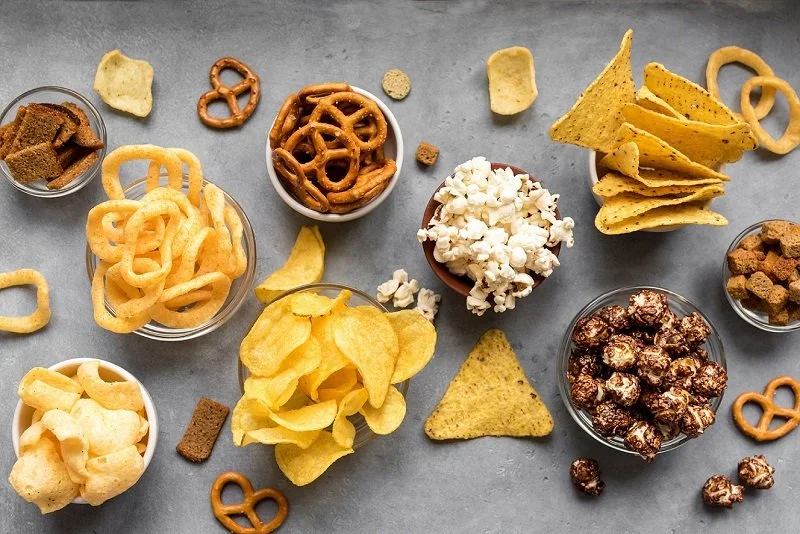
Salt Intake | Salty Snacks
Like most cravings, salty cravings are often influenced by environment and lifestyle. In many cases, craving salty foods is linked to stress, anxiety, and restrictive eating habits.
When you are under stress, feeling overwhelmed, or anxious, it can affect your appetite and increase cravings for comfort foods due to hormonal changes in the body.
Cravings may also become stronger when the body is under food restriction, such as during strict dieting. Depriving yourself of enjoyable foods can create stress and anxiety, which may later lead to overeating less healthy options when the opportunity arises. However, the body does require some salt to function properly.
The recommended daily intake of salt is no more than 2,300 milligrams per day (about 1 teaspoon).
If sodium intake is too low, in severe cases it can lead to symptoms such as muscle cramps, nausea, vomiting, and dizziness.
Salt is present in many foods we consume, from restaurant meals to packaged and processed products. Sodium, the main component of salt, is an essential electrolyte that supports muscle contractions, nerve function, and fluid balance in the body.